Capital gains tax is one of the most discussed and frequently misunderstood areas of Indian taxation. Whether you sell a flat, redeem mutual funds, exit equity shares, or transfer ancestral land, the gains arising from such transfers are taxable under the head “”Capital Gains”” under the Income-tax Act, 1961. The Finance (No. 2) Act, 2024 brought significant changes to how these gains are taxed, and these revised rules apply through FY 2025-26.

This guide explains how capital gains are classified, taxed, and exempted across different asset classes, and how you can plan to minimise your tax outflow legally.
What Constitutes a Capital Asset
Under Section 2(14), a capital asset includes property of any kind held by a taxpayer, whether connected with business or not, with specific exclusions like stock-in-trade, personal effects, agricultural land in rural areas, and certain bonds. Common capital assets include:
– Land and buildings
– Residential and commercial property
– Listed and unlisted equity shares
– Equity and debt mutual funds
– Bonds and debentures
– Gold, jewellery, and works of art
Short-Term vs Long-Term: The Holding Period Rule
The duration for which an asset is held before sale determines whether the gain is short-term or long-term, and consequently the applicable tax rate. The Finance (No. 2) Act, 2024 simplified holding periods into two categories effective from 23rd July 2024:
– 12 months for listed securities (equity shares, equity-oriented mutual funds, listed bonds, REITs, InvITs)
– 24 months for all other assets (immovable property, unlisted shares, gold, debt funds held before April 2023, and others)
Assets held for longer than these durations qualify as long-term capital assets; otherwise, they are short-term.
Tax Rates for FY 2025-26
Listed Equity Shares and Equity Mutual Funds (with STT paid)
– Short-Term Capital Gains (STCG) under Section 111A: 20%
– Long-Term Capital Gains (LTCG) under Section 112A: 12.5% on gains exceeding Rs. 1.25 lakh per year
Other Assets (Property, Unlisted Shares, Gold)
– STCG: Taxed at applicable slab rates
– LTCG under Section 112: 12.5% without indexation. A grandfathering option of 20% with indexation is available for immovable property acquired before 23rd July 2024.
Debt Mutual Funds
– Debt funds purchased on or after 1st April 2023 are taxed entirely at slab rates regardless of holding period (treated like fixed deposits)
– Debt funds purchased before 1st April 2023 retain LTCG benefit if held over 24 months
Calculation of Capital Gains
The basic formula is:
Capital Gain = Full Value of Consideration minus (Cost of Acquisition + Cost of Improvement + Transfer Expenses)
For long-term assets where indexation applies (transitional cases for property), the cost of acquisition and improvement are adjusted using the Cost Inflation Index (CII) notified by CBDT each year.
Example – Sale of Property:
– Sale price: Rs. 1,20,00,000
– Purchase price (FY 2010-11): Rs. 40,00,000
– CII for 2010-11: 167; CII for 2024-25: 363
– Indexed cost: Rs. 40,00,000 multiplied by 363/167 = Rs. 86,94,611
– LTCG with indexation: Rs. 33,05,389; tax at 20% = Rs. 6,61,078
– LTCG without indexation: Rs. 80,00,000; tax at 12.5% = Rs. 10,00,000
– The taxpayer chooses the lower option for property held before 23rd July 2024
Exemptions to Save Capital Gains Tax
The Income-tax Act provides several reinvestment-based exemptions to encourage productive use of long-term gains:
Section 54: Sale of Residential Property
Available to individuals and HUFs who reinvest LTCG into another residential house in India. Conditions include:
– Purchase within 1 year before or 2 years after the sale, or construction within 3 years
– Maximum exemption capped at Rs. 10 crore (introduced in Budget 2023)
– The new property must be held for at least 3 years
Section 54F: Sale of Any Long-Term Asset Other Than Residential Property
Allows full exemption when net consideration is reinvested in one residential house, subject to similar timelines and the Rs. 10 crore cap. This is beneficial when selling land, gold, shares, or other capital assets.
Section 54EC: Investment in Specified Bonds
LTCG from immovable property can be invested up to Rs. 50 lakh in NHAI, REC, PFC, or IRFC bonds within 6 months of sale. The bonds carry a lock-in of 5 years and offer modest interest, but provide a clean exemption.
Section 54B: Sale of Agricultural Land
Available when sale proceeds are reinvested in another agricultural land within 2 years.
Capital Gains Account Scheme (CGAS)
If you cannot reinvest before the ITR filing date, you can park the gains in a CGAS account with a specified bank to claim exemption, provided you actually utilise the funds within the prescribed timeline.
Set-Off and Carry-Forward of Capital Losses
– Short-term capital losses can be set off against both STCG and LTCG
– Long-term capital losses can only be set off against LTCG
– Unabsorbed losses can be carried forward for 8 assessment years, subject to timely filing of return
This makes it strategically valuable to harvest losses before year-end to reduce the overall tax burden.
Tax Planning Strategies
Time your exits: Holding listed equity for just over 12 months shifts the tax rate from 20% (STCG) to 12.5% (LTCG), with the first Rs. 1.25 lakh exempt every year.
Use the annual LTCG exemption: Booking LTCG of up to Rs. 1.25 lakh annually on equity is fully tax-free, a useful rebalancing tool.
Reinvest into Section 54/54F-eligible property: For large property gains, reinvestment into a single residential house can wipe out tax liability entirely, subject to the Rs. 10 crore cap.
Combine 54EC and 54/54F: Where reinvestment falls short, the balance up to Rs. 50 lakh can be parked in 54EC bonds.
Loss harvesting: Strategically sell loss-making investments to offset gains within the same year.
Joint ownership: Holding property jointly distributes capital gains across owners, potentially lowering total tax through individual exemptions and slabs.
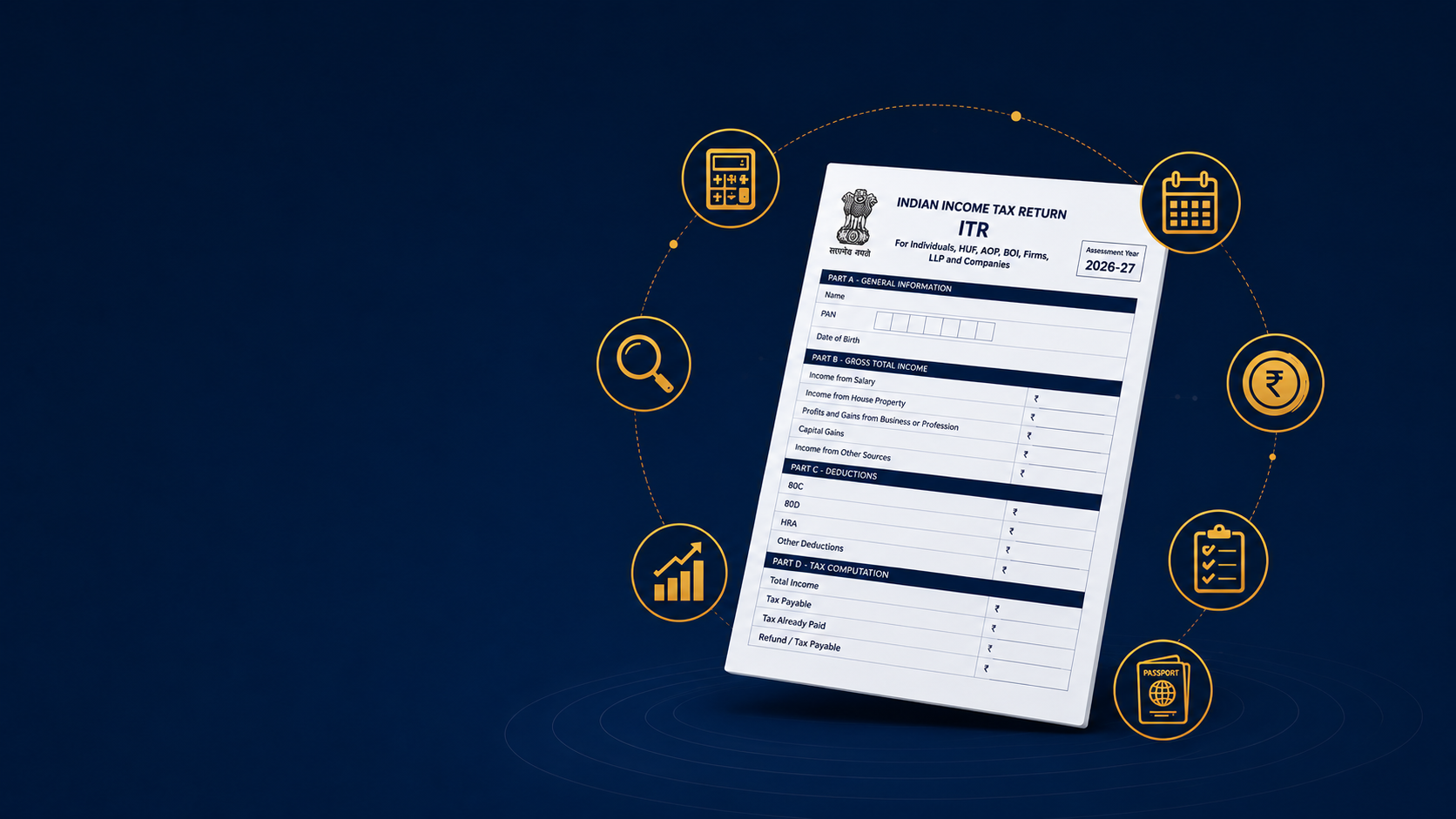
Reporting Capital Gains in ITR
Capital gains must be reported in Schedule CG of ITR-2 or ITR-3. Documentation should include:
– Sale and purchase deeds
– Brokerage and improvement bills
– Capital Gains Account passbook (if used)
– Bond investment certificates (for 54EC claims)
The ITR forms now require disaggregated reporting of pre- and post-23rd July 2024 transactions, which has added complexity to filings for FY 2024-25 and FY 2025-26.
Final Word
Capital gains tax planning is one of the highest-leverage areas of personal finance. The right structuring, timing, or exemption claim can save lakhs in tax. With the rate rationalisation introduced from FY 2024-25 and complex transitional rules for property and debt mutual funds, professional review of every major transaction is more important than ever.
B S D & Co. provides expert advisory on capital gains computation, exemption planning under Sections 54, 54F, and 54EC, indexation analysis, and accurate ITR reporting for individuals, HUFs, NRIs, and investors. Our team helps you structure exits, reinvestments, and disclosures to minimise tax legally and avoid future scrutiny.